What Blackstone's Acquisition of Hamilton Island Really Means for Property Owners
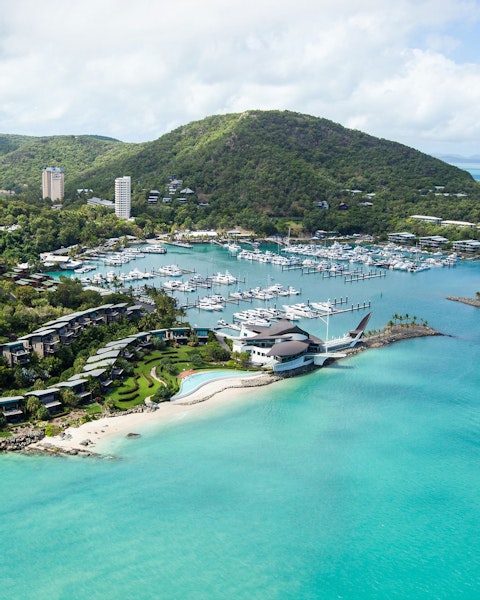
When Blackstone completed its acquisition of Hamilton Island in 2026 for approximately $1.2 billion, the headlines focused almost entirely on the transaction itself. The size of the deal, the identity of the buyer, the close of more than two decades of Oatley family ownership. What received far less attention was the question that matters most to the people who actually own property on the island: what does this mean for me?
I lived and worked on Hamilton Island for four years. I have been selling property across the Whitsundays for nine. I have relationships with property owners, long-term residents and island employees that go back the better part of a decade. In the months since the announcement, I have had this conversation many times. What follows is my honest assessment of what this acquisition means, what it does not mean, and what property owners and prospective buyers should be thinking about right now.
First, Understand Who Blackstone Actually Is
Most people have heard the name but few understand the scale. Blackstone is one of the largest alternative asset management firms in the world, with a real estate portfolio valued at more than $611 billion as of late 2025. They do not buy assets to hold passively. They buy assets with genuine upside, invest heavily in upgrading them, and exit at significantly higher valuations.
Their track record in hospitality is directly relevant here. They owned Hilton Hotels Corporation for eleven years, during which they helped double the size of the company to more than 5,300 properties worldwide. They acquired The Cosmopolitan of Las Vegas and transformed it into one of the most vibrant destinations on the Strip. In Australia specifically, they acquired Crown Resorts and invested heavily in renovating guest rooms, upgrading food and beverage offerings and rebuilding the operational management team across Crown Melbourne, Crown Perth and Crown Sydney.
The pattern across all of these investments is consistent. Blackstone identifies underperforming or underdeveloped assets with strong underlying fundamentals, invests meaningfully in the product and experience, and lets the numbers follow. Hamilton Island fits that template precisely.
The End of an Era That Had Already Quietly Passed
Bob Oatley passed away in 2016. During their more than two decades of ownership, the Oatley family invested more than $350 million into transforming Hamilton Island into the destination it is today. For the better part of a decade before the Blackstone announcement, Hamilton Island had been operating as a board-run enterprise rather than a family-led passion project. The personal era had already quietly concluded some years before the transaction made headlines. In that context, Blackstone's acquisition is less the end of something and more the beginning of the next purposeful chapter, one built on a foundation the Oatleys spent two decades and hundreds of millions of dollars creating.
What Changes and What Does Not
In the immediate term, the honest answer is: very little has changed for individual property owners. Hamilton Island has continued to operate seamlessly under new ownership. Airlines, tour operators and travel agents are continuing to sell packages and room nights as usual, with no operational changes, rebranding or new pricing structures announced. Hamilton Island Enterprises continues to manage the island's operations, utilities and services. Sublease structures, body corporate arrangements and letting conditions remain as they were. The 2078 sublease expiry and the renewal mechanism are entirely unaffected by the change in ownership.
What is likely to change over time is the ambition and the investment. With over 2,800 acres of land, the majority of which remains undeveloped, there is ample opportunity for Blackstone to enhance the island's infrastructure, expand luxury accommodations and create new attractions. The community is understandably alive with speculation about what might come. That speculation reflects excitement more than anxiety, and that itself tells you something about the sentiment on the ground.
What the Blackstone Playbook Suggests
In every major hospitality acquisition, Blackstone has invested significantly in the physical product. For Hamilton Island property owners, improved resort amenity is directly relevant to their investment. Holiday letting returns on the island are closely tied to the overall quality and reputation of the resort experience. A higher-quality resort attracts higher-quality guests who pay higher nightly rates. That flows through to owner returns in the letting pool.
Blackstone also brings global distribution and marketing capability that the Oatley family operation simply could not match. More international visitors means broader demand for the island's accommodation, which means more competition for limited property and naturally rising values. The FIRB-approved status of Hamilton Island property becomes increasingly significant in this context. International buyers who might previously have overlooked Hamilton Island as a niche Australian destination will now encounter it through Blackstone's global marketing reach.
The Undeveloped Land Question
Here is the most consequential aspect of the acquisition for the long-term trajectory of the island: approximately 70 per cent of Hamilton Island's 2,800 acres remains undeveloped. It is also worth noting that the acquisition encompasses two islands, with the 18-hole championship golf course situated on neighbouring Dent Island. That broader footprint gives Blackstone a canvas that extends well beyond Hamilton Island proper.
What Blackstone chooses to do with that land, over what timeline and at what standard, will define Hamilton Island's position in the global resort market for decades. What property owners should understand is that undeveloped land in the hands of a patient, well-resourced institutional owner with a clear track record of value creation is not a risk. It is an option. And options in a market this attractive tend to appreciate.
What This Means If You Own Property on the Island
The Blackstone acquisition does not require any immediate action from existing property owners. Your sublease is secure. Your letting arrangements remain in place. What it does require is a recalibration of how you think about the long-term trajectory of your asset.
If you have been considering selling, the Blackstone acquisition gives you a compelling narrative to bring to the market. International buyers who would previously have needed an explanation of who owns and operates the island now have an answer they recognise and trust. That makes the story easier to tell and the buyer pool meaningfully larger.
If you are holding, the investment case has strengthened. Patient ownership of quality assets in well-managed locations has historically rewarded those who stayed. Hamilton Island under Blackstone ownership is unlikely to be an exception.
Under New Ownership: What Happens Now
The transfer of Hamilton Island to Blackstone has now formally completed. Blackstone has moved quickly to establish leadership on the ground, appointing a new Chief Executive Officer and Chief Operating Officer to guide the island's next chapter. That speed of appointment signals intent. Institutional owners who are planning to hold passively do not prioritise leadership structure in the early weeks of ownership. Blackstone is clearly positioning for active management and investment rather than a period of observation.
This article reflects publicly available information and my professional experience of the island and its property market. It is not financial advice and individual circumstances vary. If you would like to talk through what this means specifically for your property, that is a conversation I am always available to have.
Stay in the Loop
Fortnightly insights from someone who lives and works here every day. Market updates, new listings, and the kind of local knowledge you will not find in a report.
.svg)
.svg)
.svg)